

12 Screen-Free Ways to Get Kids Moving Indoors This Winter
By the Flip'n Fit family · November 1, 2026
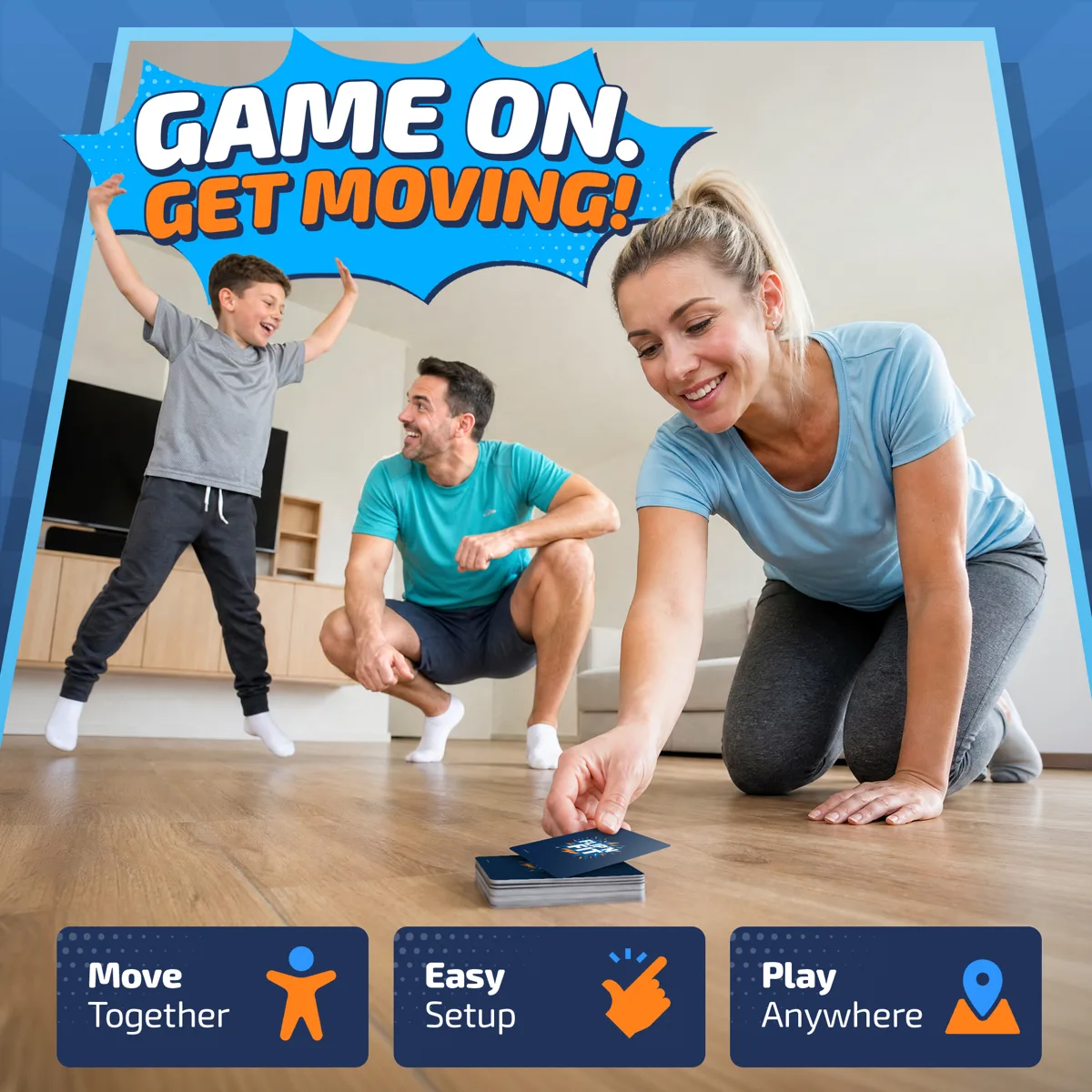
When it's dark by dinnertime and too cold for the park, screens become the default. The good news: you don't need a gym, a big house, or a plan to get kids moving. You need a few ideas that feel like play.
The CDC recommends that kids ages 6 to 17 get at least 60 minutes of physical activity every day, and short bursts count toward that total. Here are 12 ways to fit those bursts into a winter afternoon, most with things you already have at home.
Our pick
1. Play a round of Flip'n Fit
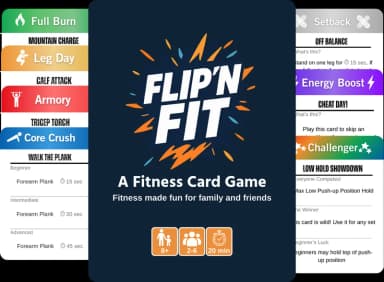
Full disclosure: this is our game. We made Flip'n Fit for exactly this problem. Shuffle the deck, take turns flipping a card, and complete whatever comes up: squats, planks, lunges, push-ups, or a Mindset challenge like recalling everything you saw in the room with your eyes closed.
Every exercise card has Beginner, Intermediate, and Advanced options, so an 8-year-old and a parent can play at the same table. Energy Boost and Setback cards keep it unpredictable, and the first player to collect two cards from each category wins.
Tip: Keep the deck by the couch. A quick round between dinner and bedtime adds up fast.
2. Build a living-room obstacle course
Couch cushions become stepping stones, a broom across two chairs becomes a limbo bar, and a blanket over the table becomes a crawl tunnel. Let kids design the course, then time each run.
Tip: Have them beat their own time instead of each other’s. Everyone stays motivated.
3. Freeze dance with a twist
Play music, pause it at random, and everyone freezes. To level it up, call out a pose to freeze in: a flamingo, a starfish, a superhero landing. Holding still on one leg is harder than it looks.
4. Masking-tape hopscotch
Painter’s tape on a hallway floor makes an instant hopscotch court that peels off cleanly later. Add a rule like "hop backwards on the way back" once kids master it.
5. Balloon keep-it-up
Blow up a balloon and don't let it touch the floor. It's gentle enough for indoors but keeps everyone lunging, reaching, and laughing. Add challenges: only elbows, only heads, or count how many hits in a row.
6. Animal-walk relay races
Bear crawls, crab walks, frog jumps, and inchworms down the hallway and back. These moves work arms, legs, and core, and kids rarely notice they’re exercising.
7. Scavenger hunt with movement stops
Write clues like "find something red" or "find something soft." Every time a kid finds an item, they do a quick move before the next clue: 5 jumping jacks, 10 seconds of plank, or 3 squat jumps.
8. Sock basketball
Roll socks into balls and use a laundry basket as the hoop. After every basket, the shooter takes one big step back. Rebounds mean lots of running, ducking, and diving.
9. Simon Says, fitness edition
Same rules, sneakier moves. "Simon says do 5 squats." "Simon says hold a plank." "Touch your toes!" (Gotcha.) Let kids take turns being Simon. They’ll come up with harder moves than you would.
10. Hallway bowling
Empty plastic bottles become pins and any soft ball works. Make a rule that the bowler has to squat to reset every pin. Ten frames later, that’s a lot of squats.
11. Act out a yoga story
Tell a story and turn it into poses: a tree in the wind, a cat stretching, a mountain, a sleeping butterfly. It’s a calmer option for the end of the day that still builds balance and flexibility.
12. Beat-the-clock tidy race
Set a timer for five minutes and race to put toys away. It's movement, and your living room is clean afterward. Everybody wins.
You don't need to do all twelve. Pick two or three, rotate them through the week, and let kids choose. The best activity is the one they'll ask to do again tomorrow.
As with any physical activity, pick moves that suit your space and your kids’ abilities, clear away anything breakable, and keep an eye on younger players.